How to Use Cryotherapy for Injury Recovery

Table of Contents
What Cryotherapy Does for an Injury
How Cold Changes Blood Flow and Swelling
Cryotherapy vs Ice Packs for Injuries
When a Bag of Frozen Peas Beats a Cryo Chamber
Step-by-Step: How to Use Cryotherapy for Injury Recovery
Step 1: Get the Injury Assessed First
Step 2: Pick the Right Method for Your Injury
Step 3: Protect the Skin and Set the Timer
Cryotherapy Session Duration and Frequency
Duration by Modality
Frequency and the Rewarming Window
Tissue Depth Changes the Math
Acute vs. Chronic Dosing
What to Track
Cryotherapy Safety Guidelines and Who Should Skip It
Warning Signs to Stop Immediately
Condition-Specific Contraindications
Modality-Specific Risks
Skin Protection Basics
Matching the Protocol to the Injury
Acute Sprains, Strains, and Post-Surgical Recovery
Chronic Pain and Desk-Job Muscle Tension
Home Units vs. Professional Cryotherapy
Frequently Asked Questions
Last Updated: September 20, 2026
What Cryotherapy Does for an Injury
Cryotherapy is the use of cold temperatures to treat tissue damage, reduce inflammation, and ease pain after an injury. It works by slowing blood flow to the injured area, which limits swelling and calms irritated nerves.
How Cold Changes Blood Flow and Swelling
Cold triggers vasoconstriction, the narrowing of blood vessels near the skin. This slows circulation to the injured spot, which reduces edema and limits inflammation in the first day or two.
Cryotherapy vs Ice Packs for Injuries
Ice packs and cryotherapy both use cold, but they are not the same tool. A bag of frozen peas delivers cold to a small area. A cryo-chamber or cold water immersion tank cools the whole body at once.
When a Bag of Frozen Peas Beats a Cryo Chamber
A cold therapy unit with a wrap beats a chamber for almost every joint injury. Here is why:
It targets one spot instead of the whole body
You control the therapeutic temperature precisely
You can use it at home, multiple times a day
It costs far less per session
Step-by-Step: How to Use Cryotherapy for Injury Recovery
Here is the short version: get assessed, pick the right method, protect the skin, and set a timer. Skip any step and you risk frostbite or a slower recovery.

Step 1: Get the Injury Assessed First
See a doctor or physical therapist before you ice anything. Cold masks pain, and masking pain can hide a fracture or a torn ligament.
Step 2: Pick the Right Method for Your Injury
Match the method to the injury and the body part:
Ice pack or gel wrap: small joints, acute sprains, post-surgical sites
Ice massage: a specific trigger point or tendon
Cold water immersion: a whole limb or the full body
Cryo-chamber: whole-body recovery after training
Step 3: Protect the Skin and Set the Timer
Never place ice directly on bare skin. Wrap it in a thin towel or use a commercial barrier.
Cryotherapy Session Duration and Frequency
Dosing is where most home users get cryotherapy wrong. The right numbers depend on three things: the modality, the body part, and whether the injury is acute or chronic. A single "10 to 20 minutes" rule flattens all of that.
Duration by Modality
Ice pack or gel wrap: 15 to 20 minutes per session on a large joint like a knee or shoulder; 10 minutes on a small joint like a wrist or ankle.
Ice massage (ice cup or frozen gel stick): 5 to 10 minutes, moving continuously over the tissue. Stop when the skin turns pink, not white.
Cold water immersion (limb): 10 to 15 minutes at roughly 50 to 59 degrees Fahrenheit. Colder water needs less time.
Cold water plunge (full body): 5 to 10 minutes at 50 to 59 degrees Fahrenheit is a common range for recovery.
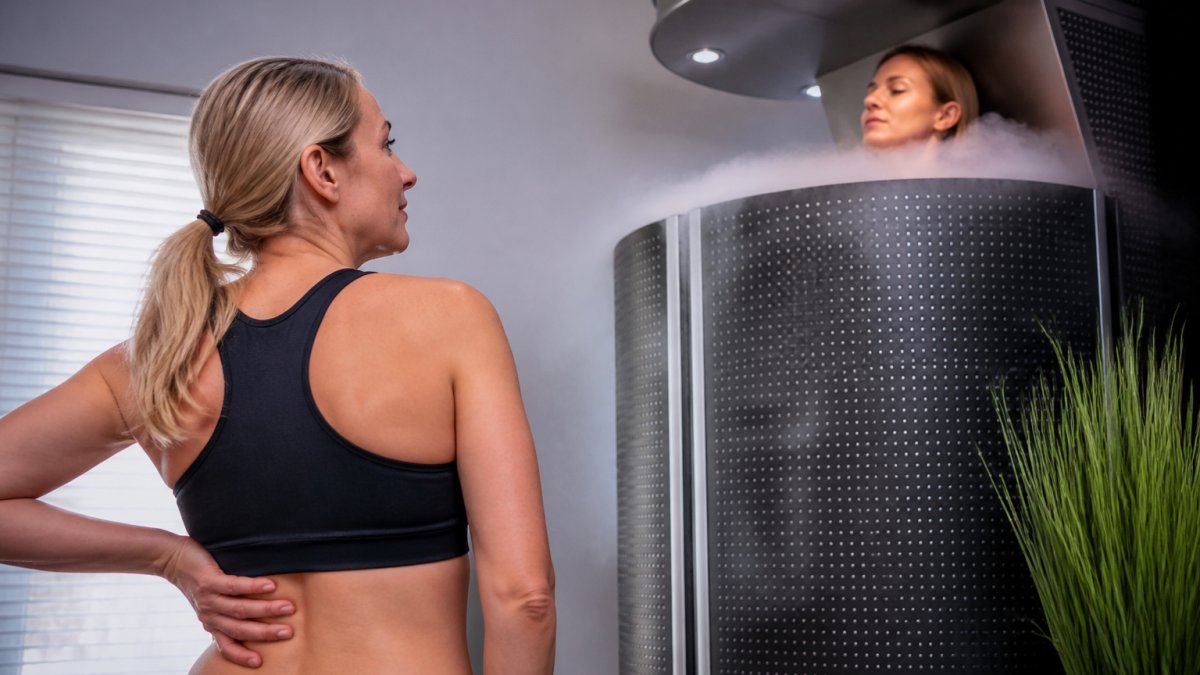
Whole-body cryo-chamber: 2 to 4 minutes at minus 200 to minus 260 degrees Fahrenheit, always with operator supervision and dry skin.
Mechanical cold therapy unit with wrap: 20 to 30 minutes per cycle, often with a 30-minute off period, per the device's instructions.
Frequency and the Rewarming Window
Skin needs to rewarm fully between sessions. A common pattern is at least 60 to 90 minutes of off-time before reapplying cold to the same spot. During the first 48 hours after an acute injury, three to four short sessions a day is typical. After that window, most practitioners drop to one or two sessions a day and shift focus to movement and loading.
Tissue Depth Changes the Math
Cold penetrates slowly. Subcutaneous fat insulates, so a person with more body fat over a joint needs a slightly longer application to reach the same tissue temperature than a leaner person. Muscle cools faster than fat; a thigh takes longer to chill than a forearm. This is why a fixed timer is a starting point, not a prescription.
Pro Tip Set a timer for the low end of the range on your first session, then check the skin. If it is pink and cool but not numb, you can extend slightly next time. If it is numb, white, or waxy, you went too long.
Acute vs. Chronic Dosing
Acute injuries (first 48 to 72 hours) respond to frequent, short, aggressive cold to blunt swelling and pain. Chronic issues like tendonitis or desk-job muscle tension respond better to brief, targeted cold (ice massage for 5 to 10 minutes) used to calm a flare, paired with heat and movement on other days.
Watch Out Never leave a cold pack on while you sleep, and never stack a session on top of a session without letting the skin fully rewarm. Frostbite risk climbs fast when the skin never gets a break.
What to Track
Keep a simple log for the first week: time of session, modality, body part, duration, and how the area felt 30 minutes later. Patterns show up fast. If pain is worse two hours after a session, you either went too long or the injury needs a clinician's eyes.
Cryotherapy Safety Guidelines and Who Should Skip It
Cold therapy is safe for most people when time limits are respected and skin is protected. The risks come from three places: overexposure, applying cold to tissue that cannot sense or respond to it properly, and using the wrong modality on the wrong body part.
Warning Signs to Stop Immediately
Check the skin every few minutes during any session. Stop and rewarm if you see:
Skin turning white, gray, waxy, or hard
Numbness that does not fade within 10 to 15 minutes of removing the cold
A burning or stinging sensation under the pack
Blisters, mottling, or a frozen feel to the tissue
Pain that gets sharper instead of duller
Condition-Specific Contraindications
This is the checklist most guides bury. If any of the following apply, talk to a clinician before using cryotherapy, and in some cases skip it entirely.
Modality-Specific Risks
Coolant sprays (vapocoolants): These cool fast and hard, and it is easy to over-apply. They are meant for short pre-injection numbing, not home injury care. Frostbite from misuse is well documented.
Whole-body cryo-chambers: Require dry skin, protective gloves, socks, and a mask. Never use one alone or without operator supervision.
Cold water immersion: The initial cold shock response can cause gasping and rapid breathing. Enter slowly and never alone.
Mechanical cold therapy units: Risk comes from leaving them on too long or setting the temperature too low. Follow the device's instructions and use the wrap's barrier layer.
Skin Protection Basics
Never place ice directly on bare skin. Use a thin cloth or the manufacturer's barrier. Do not use cold therapy over the spine, the front of the neck, or directly over a major nerve for extended periods. Do not use it on an area that is already numb from a prior session.
Watch Out This is general information, not medical advice. If you have any of the conditions above, or if you are unsure whether cold therapy is right for your injury, get cleared by a clinician first.
Key Takeaway Cold therapy is low-risk for healthy adults who respect time limits and protect the skin. It is high-risk for anyone with impaired circulation, impaired sensation, or a cold-triggered condition. When in doubt, ask before you ice.
Matching the Protocol to the Injury
Different injuries need different cold protocols. A fresh sprain and a stiff neck from desk work are not the same problem, so they should not get the same treatment.
Injury Type | Best Method | Typical Session | Frequency |
Acute sprain or strain | Ice pack or gel wrap | 10-20 minutes | Every 1-2 hours, first 48 hours |
Post-surgical site | Cold therapy unit with wrap | 15-20 minutes | As directed by your surgeon |
Chronic muscle tension | Ice massage or targeted pack | 5-10 minutes | 1-2 times daily |
Whole-body soreness | Cold plunge or cryo-chamber | 3-15 minutes | After training, a few times weekly |
Acute Sprains, Strains, and Post-Surgical Recovery
For a fresh sprain, cold is your first line for the first two days. Use it to control swelling and pain management, then switch to gentle movement.
Chronic Pain and Desk-Job Muscle Tension
Cold helps chronic tension less than heat does. If your neck and shoulders ache from hours at a screen, a targeted ice massage can calm a flare-up.
Home Units vs. Professional Cryotherapy
Home ice packs handle most everyday injuries. Professional cryotherapy is worth it when you need whole-body recovery, precise temperature control, or a supervised setting.
Frequently Asked Questions
Can cryotherapy help with injury recovery?
Cold therapy is widely used after musculoskeletal injury to reduce pain and limit swelling. Lowering tissue temperature slows nerve conduction velocity, which dulls pain, and triggers vasoconstriction that limits fluid buildup around damaged tissue. It works best as one part of a recovery plan alongside rest, compression, and guided rehabilitation. It does not repair torn tissue on its own, and it should not replace an evaluation from a qualified professional, especially after a car accident or a suspected fracture.
How many times a week should you use cryotherapy?
For an acute injury in the first 48 to 72 hours, short cold applications several times a day are common. Once past the acute stage, most people use cold therapy once or twice daily, or after training and physical therapy sessions. Whole-body cryotherapy sessions are usually spaced at least several hours apart with one session per day. Your cryotherapy session duration and frequency should follow the guidance of the professional treating your injury, since tissue type and stage of healing change what is appropriate.
What are the safety precautions when using cryotherapy for injuries?
Follow cryotherapy safety guidelines closely: never apply ice directly to bare skin, always use a barrier such as a towel or sleeve, and keep applications short. Check the skin every few minutes for numbness, blotchy color, or a burning sensation and stop immediately if any appear. Do not use cold therapy on areas with poor circulation, open wounds, or numb skin. People with Raynaud's phenomenon, cold urticaria, or peripheral vascular disease should avoid it unless a physician approves.
Is cryotherapy better than ice packs for injuries?
Neither is universally better. Cryotherapy vs ice packs for injuries comes down to the goal and the setting. Ice packs and cold therapy units offer targeted, controlled cooling and are the standard for a specific joint or muscle after an acute injury. Whole-body cryotherapy exposes the entire body to very cold air for two to four minutes and is often used for generalized soreness, recovery, and chronic pain. Many recovery plans combine both, using targeted cold for a fresh injury and whole-body sessions later in rehabilitation.
Cold therapy is simple, but using it well takes timing, the right method, and a plan built around your specific injury. At FloatWell, we pair cryotherapy with float therapy, infrared saunas, and red light therapy to support whole-body recovery. We bill MVA insurance for car-accident recovery and accept HSA cards, so your care stays accessible. Book an appointment with FloatWell and build a recovery plan that fits your body and your budget.
Book an Appointment


Comments